
Introduction
The LED flood light beam angle is a core optical parameter that directly determines light distribution. It influences the range of illumination and the lighting effect. Inappropriate choices of light beam angle can lead to light pollution and resource waste. Here is a detailed guide to choosing the right LED floodlight beam angle.
What Is the LED Beam Angle?
LED beam angle determines the range of light diffusion. It refers to the angle between the LED light beam’s centerline and the point where the light intensity drops to 50%. Understanding the definition is essential to designing suitable lighting schemes.
The smaller the angle, the more concentrated the light beam, and the higher its intensity at the center. Therefore, the spot is narrower and brighter, with a strong contrast between light and dark.
By contrast, the larger the angle, the more dispersed the light beam, and the lower the intensity at the center. Therefore, the wider the light’s coverage, the softer and more uniform it is.
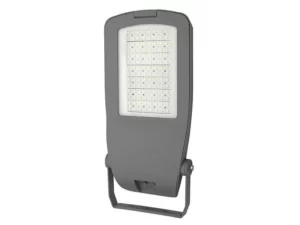
Types of LED Beam Angle
Narrow Beam Angles (≤20°)
Narrow beam angles concentrate light, forming a strong, bright focal point. The boundary between light and dark is clear, and the visual impact is substantial.
These light beams are specifically used for exhibits in museums and art galleries. The bright, focused light beam reveals the details of the exhibits. As for architecture, they can precisely light the building facade, sculptures, and the tops of monuments. You can see the narrow LED beam angles in the home, such as lighting the decorative paintings on the wall and the collection.
Narrow beam angles have a powerful visual focusing ability. A person’s gaze can lock onto a target object instantly, creating a dramatic effect. Additionally, a strong contrast between light and dark can highlight the texture, feel, and three-dimensional form of architecture. Narrow beam angles focus nearly all light energy in a small spot. This creates very high illumination in the target area. This improves the efficiency of light energy utilization.
Medium Beam Angles (24°-40°)
Medium beam angles are the “golden zone” for the transition from accent lighting to ambient lighting. The light shines mainly in one direction, but it’s starting to spread out. The area where the light meets the surroundings is soft and gradual.
They have a wide range of applications. They are very versatile. You can use them in homes and businesses. They work well for kitchen countertops, study desks, mannequin displays in stores, and dining areas. Besides, medium beam angles provide uniform lighting on textured walls, creating a sense of layering.
Medium beam angles can clearly illuminate a work area without producing overly harsh light spots. They can light up vertical surfaces, like walls or shelves. This improves how clearly you see things.
Wide Beam Angles (45°-60°)
Wide beam angles provide comfortable, uniform lighting. The beam is evenly dispersed through a shallow reflector or diffuser, resulting in a smooth light intensity distribution curve.
Wide LED beam angles are often used in areas that require evenly distributed light. For example, meeting rooms, classrooms, and open-plan offices. Wide beam angles provide an overall brightness and reduce shadows.
This type reduces the contrast between the ceiling and the floor, making the space appear taller and more spacious. The lights are comfortable and glare-free, which reduces visual fatigue.
Extra-wide Beam Angles(≥ 90°)
The lights lack a clear beam direction and diverge into a nearly 180-degree hemispherical spread. Extra-wide beam angles aim to eliminate the shadows.
This type is generally used for floodlighting and low-ceiling lighting. For example, parking lots, warehouses, and staircases adopt extra-wide beam angles to illuminate.
Extra-wide beam angles achieve nearly 180° lighting, minimizing shadows and dark corners to the greatest extent.
Asymmetric Beam Angle
Asymmetric beam angles are achieved through a special optical design that makes the beam angles differ on the horizontal and vertical axes, forming elliptical or rectangular beam spots.
This light angle directs more light towards the areas of the road that need illumination. So, it improves light energy efficiency and reduces light pollution.
Asymmetric beam angles direct light energy on the surfaces that need illumination without waste. Additionally, they can control the direction of beams, which effectively avoids direct glare.

How to Choose a Suitable LED Beam Angle?
1. Ensure lighting targets and scenes.
Different scenes require different beam angle lighting. So, clarifying and ensuring your lighting targets are essential. Is it to focus strongly on a piece of art or to evenly illuminate the entire desk? Or is it to create a soft wash of light on the wall? The target determines the required “focus” or “diffusion” of light. Accent lighting requires focused light, while ambient lighting requires diffused light.
2. Analyze key installation parameters.
The key parameter is the distance between the lamps and the illuminated face. With the same beam angle, the farther the distance, the larger and the darker the projected light spot. By contrast, the closer the distance, the smaller and brighter the light spot. Typically, higher installation heights require narrower beam angles.
3. Select the LED beam angle based on scenes.
- Narrow beam angle: suitable for small objects that require precise brightness control. Such as sculpture, furnishings, and small decorative paintings.
- Medium beam angle: it is the most general and commonly used range. The spot size is moderate, which balances the focus and transition. It is suitable for lighting canteen tables, coffee tables, and medium-sized decorative paintings.
- Wide beam angle: provides basic illumination with diffused light, covering a larger area. It is applied to occasions that require uniform, gentle lights.
- Extra-wide beam angle: it does not have an obvious spot boundary. It is often used for situations that require uniform lighting across the entire area, without highlighting any particular area.
4. Adjust formulas based on details.
The ideal spot size should be smaller than the object being illuminated.
High spaces need narrow-beam-angle lighting; low spaces require wide-beam-angle lighting.
In environments where people spend a lot of time and use their eyes, wide-beam angle lamps need to be equipped with anti-glare features. This can improve visual comfort.
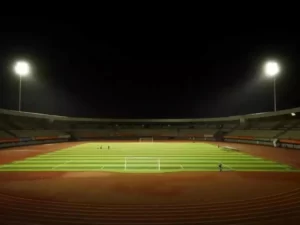
Why Choose the LED Beam Angle?
1. Precisely control the distribution of light.
- Define the light range: LED beam angles determine the light’s diffusion range and the intensity distribution on the illuminated surfaces.
- Avoid light pollution and waste: a precise beam angle prevents light from reaching non-target areas, reducing glare and improving energy efficiency.
2. Meet the needs of different scenes.
Different beam-angle lighting configurations satisfy functional requirements in various scenarios. Proper beam angles maximize the beauty of illuminated objects.
3. Improve energy efficiency and the economy.
- Optimize luminous flux utilization: matching the scene’s beam angle can reduce the number of lights, lowering energy consumption.
- Prolong lamp lifespan: setting LED beam angles helps avoid over-illumination.
4. Affect visual feeling and spatial aesthetics.
- Shape spatial hierarchy: it creates a clear distinction between primary and secondary light and shadow effects through mixing different light angles.
- Control shadows: narrow beam angle forms strong contrast and transparent shadows; wide beam angle reduces shadows and forms a uniform beam.
Conclusion
Choosing the proper LED flood light beam angle is one of the most critical steps in designing lighting schedules. It directly influences the range of illumination, lighting effect, and visual experience. Besides, it plays a vital role in environmental protection and saving energy consumption. A proper beam angle can effectively control glare and improve energy efficiency.