
Introduction
Streetlights are of utmost importance as they improve visibility on roads, streets, and pathways. Their use has become common not only in cities but also in small towns. There is a wide range of streetlights available in the market. Among these, HPS and LED streetlights stand out. Their distinctions make people debate HPS vs LED street lights.
Interestingly, the majority believe LED-based streetlights are more advanced and better options. However, some individuals still believe in HPS and consider it superior. This difference in opinion sparks confusion, especially among the newbies. I’m writing this article to discuss the differences between HPS and LED street lights. So, let’s get started!

Overview of HPS & LED Street Lights
Before discussing distinctions, I will first guide you about the basics of HPS and LED streetlights.
HPS stands for “High Pressure Sodium”. These streetlights produce yellowish light by passing current through sodium vapors. In contrast, LED streetlights are more advanced and rely on LED technology. They pass current through diodes, which produce light. LED-based streetlights produce brighter light and are more energy-efficient.
HPS streetlights rely on older technology, which is not very common these days. You may not see these lights in modern towns or streetlights. These lights work using the sodium enclosed in the glass tube. The electric current passes through the tube, which heats the sodium. This heating produces an orange or yellowish glow, which is used as light.
Since heating sodium can take time, these lights do not produce light immediately when switched on. There is a small delay in their working. On the other hand, LED streetlights do not involve heating anything. Instead, they use diodes, which are responsible for the working of these streetlights. In these lights, an electric current passes through the diode, causing it to emit light.
These LED-based streetlights work instantly – meaning you switch them on, and they start working immediately. What I like about LED-based streetlights is their energy efficiency. These lights don’t consume much electricity while producing brighter lights. Some old-style streets still use HPS streetlights because of their yellowish light. This yellowish or orange glow makes the street unique.
HPS VS LED Street Lights: What Are the Differences?
As I said above, modern streetlights rely on LED technology. Despite this, some people consider HPS lights a decent option. This can be confusing if you’re looking to choose between these two lights. That’s where understanding the differences between LED and HPS streetlights becomes essential. In the section below, I will explore the key differences between these lights.
1- Light Color Output & Modern Features
HPS and LED streetlights differ in their light colors. As I said above, the HPS streetlights use sodium to produce light. So they give light with a yellowish or orange color. This light is very strong, but it does not help you see the true color of different objects.

This can be a drawback, as you may not be able to clearly see different objects on the street. On the other hand, LED streetlights give white light, which is very bright. This white light helps you see everything more clearly on the streets. You’ll be able to see road signs and pedestrians with ease. Due to yellowish light, HPS is not the ideal option for streets.
Remember, the LED streetlights are modern and more advanced. They also come with motion sensors that turn them on when movement is detected. Additionally, these streetlights come with safety features to prevent damage. However, the HPS streetlights are not very modern and lack advanced features.
2- Energy Efficiency & Power Consumption
LED streetlights stand out for their energy efficiency and low power consumption. As I said above, LED lights consist of diodes for producing light. These lights convert almost all energy into light, resulting in no energy waste. On the other hand, HPS streetlights waste light as heat during the gas discharge process.
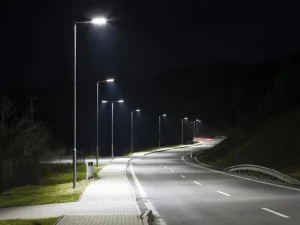
As I said, these lights involve heating sodium gas to produce light. This heating process results in energy waste and makes these lights more power-consuming. Simply put, LED streetlights use 30 to 50% less energy while producing the same amount of light as HPS streetlights. That’s one of the major reasons LED streetlights are replacing conventional HPS streetlights.
3- Warm-Up Time & Heat Generation
Warm-up time and heat generation are two important considerations. HPS streetlights work by heating the sodium gas to produce light. This heating process takes time, so HPS streetlights take time to reach peak brightness. This delay is called warm-up time, which makes HPS streetlights inferior.
You won’t have to worry about warm-up time when using LED streetlights. Heat generation is also common in HPS streetlights. Why? The reason is that these streetlights produce light by heating sodium gas. This process generates heat, which makes HPS streetlights less eco-friendly. LED streetlights do not generate heat and are very eco-friendly.
4- Durability & Lifespan
HPS streetlights are an inferior option in terms of durability and lifespan. These streetlights can remain in good condition for around 12000 to 15000 hours. Additionally, these lights consist of gas enclosed in a glass tube. During bad weather, glass tubes can also get damaged. Above all, these streetlights lose their efficiency over time.
In contrast, LED streetlights are more durable and can last for over 50000 hours. Additionally, these streetlights can withstand bad weather and sudden shocks with ease. You won’t face durability issues in these LED-based lights. Additionally, these streetlights will produce consistent lumen output throughout their life.
5- Light Distribution & Visibility
HPS streetlights emit light that scatters in different directions. These scattered lights do not evenly illuminate the street or path. That’s why you’ll use reflectors to focus light onto the streets. Despite the use of reflectors, light loss is common, reducing visibility.
On the other hand, LED streetlights are highly efficient in terms of light distribution and visibility. How? That’s because these streetlights produce focused light that illuminates the path; you won’t need a reflector to focus it. Above all, the light loss is minimal in the LED-based streetlights. As a result, you get excellent visibility in the streets.
6- Weather & Shock Resistance
LED streetlights stand out for their weather and shock resistance. The reason is that these streetlights use solid-state components made of durable materials. These components can withstand vibration, shocks, and bad weather with ease. Modern LED streetlights come with IP ratings, which further enhance their weather resistance.
On the other hand, HPS streetlights consist of a glass bulb. Inside this glass, sodium gas is present. Vibration or shock can break the glass bulb, making these streetlights vulnerable. Additionally, bad weather, such as rain, can affect the performance of these streetlights. I recommend choosing LED streetlights for their weather and shock resistance.
7- Size & Design Flexibility
HPS streetlights are typically larger, which is a drawback. Additionally, they feel bulkier and heavier. Why? The reason is that these lights consist of multiple reflectors, ballasts, and so on. More internal components make these streetlights bulky. On the other hand, LED streetlights are compact as they have fewer internal components.
They don’t have dedicated ballasts or reflectors, which allows manufacturers to keep their size small and compact. Due to their compactness, manufacturers can adjust their design to make them look more visually appealing. If you want streetlights with an appealing design, choosing LED streetlights makes sense. HPS streetlights are less visually appealing due to their bulky, conventional design.
8- Initial vs Long-term Cost & Applications
Cost is an important consideration when comparing LED vs. HPS street lights. HPS streetlights stand out as the most budget-friendly option. They utilize outdated technology, which makes these lights a cheaper option. However, their long-term cost is high because they consume more electricity.
Additionally, they are less durable and may need frequent replacement and maintenance. This ongoing higher cost makes HPS less user-friendly. On the other hand, LED streetlights have a high upfront cost, which might sound like a deal-breaker. However, these streetlights come with lower ongoing costs. They consume less electricity and offer a high lifespan.
Their regular maintenance or replacement cost is almost zero. This makes the LED streetlight an excellent option in the long run despite higher initial cost. Below is the table showing the application of HPS and LED streetlights:
| HPS Street Lights Applications | LED Street Lights Applications |
|---|---|
| Old highways & roads | Smart cities & modern roads |
| Industrial areas | Residential streets |
| Traditional street lighting | Parking lots & campuses |
| Rural & low-budget projects | Commercial & urban areas |
| Legacy infrastructure systems | Smart/IoT lighting systems |
Conclusion: Which One Should You Choose, HPS or LED Street Lights?
Still wondering about which of these two streetlights is the best option? Worry not; here is my verdict.
I recommend choosing LED streetlights in most cases. Despite their higher cost, these streetlights offer excellent performance. They can illuminate more space, making the area look more visible. Additionally, these streetlights are very durable, which is a deal-maker. You won’t have to worry about them in bad weather. Even these lights can withstand extreme vibration or shocks with ease.
If you’re on a tight budget, you have no option but to go with HPS streetlights. They may not be the best but can be a starting point. One thing you should also remember is availability. LED-based streetlights are readily available in every local market. However, HPS streetlights are outdated and may only be available in specific stores.