
Introduction
LED flood lights are widely used in outdoor lighting. They boast high brightness, high reliability, and excellent energy efficiency. Whether in construction sites, parking lots, stadiums, or warehouses, these lights are the first choice. They also play a crucial role in the facade lighting of large public facilities.
However, many project managers have a misconception. They often focus only on the performance of the lights themselves, neglecting a key point: proper installation and subsequent maintenance. This is the core of ensuring the long-term stable operation of LED floodlights.
Professional installation and maintenance can improve luminous efficacy and extend lifespan. This article provides practical tips for installing and maintaining LED flood lights correctly. This will help significantly reduce the later failure rate and maintenance costs.
Safety Requirements for Outdoor LED Flood Light Installation
Safety is always paramount. In any outdoor electrical installation project, safety is always the primary consideration.
1. Compliance and Certified Personnel
Floodlights are typically installed at high locations, such as the top of poles, warehouse exteriors, or high-mast lighting positions in parking lots. Therefore, all operators must hold valid and compliant electrician certificates. Certification is not only a regulatory requirement but also a prerequisite for ensuring construction safety and quality.

2. Safety Equipment for High-Altitude Work
During work at heights, it is essential to ensure that all protective equipment is in place. This includes: safety ropes, safety belts, insulated gloves, and a professional operating platform. Safety protection equipment is essential, such as safety belts and safety helmets. Whenever workers are off the ground, they must wear safety belts. Especially when working at the edge of the aerial work platform, climbing lamp posts, or rooftops. Safety helmets must be worn at any construction site where there is a risk of falling.
Installation work can only proceed when safety is completely under control. This minimizes construction risks and lays a solid foundation for the project’s smooth progress.
Key Preparation Steps Before Installing LED Flood Lights
An efficient and smooth installation process often begins with thorough preparation. Before installing LED flood lights, the following key steps need to be completed:
1. Choosing the Right LED Flood Light Fixtures
Every project has unique lighting needs. Selecting the right LED flood light fixtures is critical to achieving the desired illumination outcome.
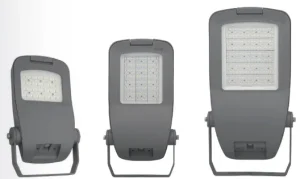
Outdoor luminaires require a minimum IP65 or IP66 rating and corrosion-resistant housings. So, the luminaires can withstand prolonged exposure to rain, dust, extreme temperatures, and UV radiation.
Additionally, different mounting heights and coverage areas demand specific optical distributions to ensure proper beam angles, coverage, and uniformity.
2. Selecting the Right Tools
Tools are essential for ensuring quality installation. Using the correct tools is crucial during LED floodlight installation.
To ensure smooth installation, you will need the following tools:
- Electric drill: drilling and fixing.
- Insulated screwdriver: electrical safety.
- Torque wrench: structural tightening.
- Professional waterproof wiring device: protective sealing.
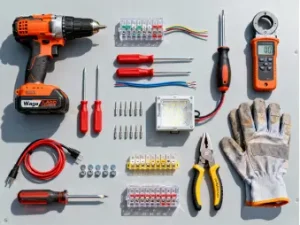
Professional tools improve installation efficiency. Only by using professional equipment can the long-term safety and reliability of the lighting fixture structure be ensured.
3. Preparing Equipment for High-Altitude Installation
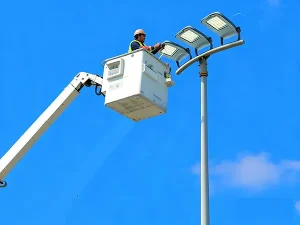
For high-mount LED floodlight installations, aerial work platforms such as aerial work vehicles are indispensable. They’re the most commonly used access equipment for these projects. Before beginning work, always verify the platform’s stability and operational condition.

4. Planning Power Shutdown and Installation Schedule
When installing LED floodlights, minimize disruption to public areas or business premises. Issue advance notice of any power outages. Ensure relevant areas are informed of the planned power outage.
Define the specific construction time. This step is particularly crucial for large commercial projects. This can significantly reduce the risk of unforeseen events.
Step-by-Step LED Flood Light Installation Process
With all preparations complete, the actual installation can proceed.
Strict Power-Off Procedures
Installing floodlights requires complete de-energization of the circuit. Construction can only proceed after the power-free state is achieved with professional equipment. This is essential for operator safety.
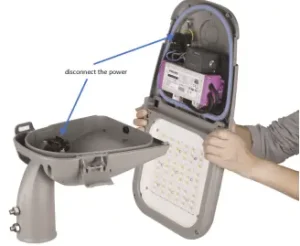
Standardized Installation Steps
During LED flood light installation, installers must follow the fixture’s installation instructions and applicable project standards. Every step must be standardized and precise.
- Secure the mounting bracket.
- Adjust the illumination angle.
- Apply waterproof sealing.
- Connect the supply wiring.
Best Practices for Maintaining Outdoor LED Flood Lights
LED flood lights last a long time and are very reliable. However, outdoor conditions can expose them to dust, moisture, weather, and temperature changes. Therefore, regular maintenance is essential.
Here are some essential maintenance best practices:
- Check the lamp housing for cracks and corrosion. Seal failure will directly lead to a decline in waterproof performance.
- Check for loose cables and terminals. Poor contact at the interface can cause abnormal overheating.
- Clean dust and dirt from the light fixture surface to improve luminous efficiency. You can wipe light shells with a soft cloth.
- Check that the bracket-fixing screws are secure. Outdoor floodlights are easily influenced by wind and rain, leading to angle offset.
- Check for light attenuation or flickering. A single LED not lighting up could mean there’s a problem. If you see flickering or dimming, it might be an issue with the driver or power supply.
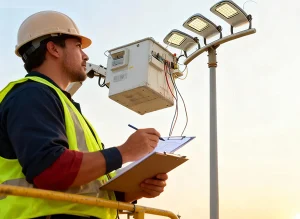
Following these simple steps will keep your LED floodlights performing at their best year after year.
Conclusion
In modern outdoor and industrial lighting applications, LED floodlights have become essential. A successful floodlight system depends not only on high-quality fixtures but also on professional installation and maintenance.
High-quality luminaires ensure long-term operation of the system. Besides, proper installation—following safe, standardized procedures—and regular maintenance are equally critical for long-term performance.
If you need a reliable, efficient outdoor lighting solution, please get in touch with us. Our team is ready to assist with expert consultation, custom optical design, and full technical support.